Engineered for maximum material efficiency and extreme marine environment operational resilience.
An Industrial Analysis of Cementitious Demand, Infrastructure Expansion, and Coastal Climate Challenges
Antigua and Barbuda, situated at the heart of the Eastern Caribbean, is undergoing a pivotal transition in its infrastructure landscape. Driven by massive investments in luxury tourism real estate, deep-water port expansions in St. John’s, and the comprehensive reconstruction projects on Barbuda following major hurricane events, the requirement for high-grade, resilient concrete has surged exponentially. The regional construction market has shifted from basic architectural designs toward structural concrete projects capable of resisting Category 5 hurricanes and severe marine corrosion.
Developing concrete infrastructure in small island developing states (SIDS) requires local batching solutions that minimize reliance on imported precast components. High-capacity concrete batching plants have become the foundational platform for regional developers, enabling on-site raw material quality control, minimizing water-to-cement ratios, and delivering high-yield production runs. From commercial ready-mix plants supporting urban expansion in Saint George to mobile configurations deployed for isolated resort runways in Barbuda, the localized processing of aggregates is the primary driver of execution speed and project cost control.
Operating a concrete batching plant in Antigua and Barbuda presents unique ambient challenges. Close proximity to the Atlantic Ocean and the Caribbean Sea subjects the plant machinery to relentless airborne chloride concentrations and high relative humidity. Standard structural steel configurations rapidly degrade under these conditions, leading to early mechanical failures and precision weighing sensor drift.
To counteract this, modern concrete batching plants specified for the Caribbean must feature premium anti-corrosion treatments. Key parameters include heavy-duty polyurethane coatings, hot-dip galvanized aggregate bins, marine-grade wiring insulation, and stainless-steel load cells sealed to IP68 standards. Additionally, the high ambient temperature of the region requires specialized concrete cooling configurations, such as ice-water dosing systems and aggregate shading structures, to keep concrete discharge temperatures below the critical 32°C threshold. This ensures optimal setting times, preventing premature hydration cracking during casting operations.
Aligning State-of-the-Art Production Technologies with Localized Civil Engineering Requirements
Zhengzhou Cloverdyn Plant Co., Ltd. is a leading China manufacturer specializing in the design, production, and supply of stationary and mobile concrete batching plants. Established with a commitment to innovation, quality, and efficiency, Cloverdyn has become a trusted partner for construction companies, contractors, and industrial projects worldwide.
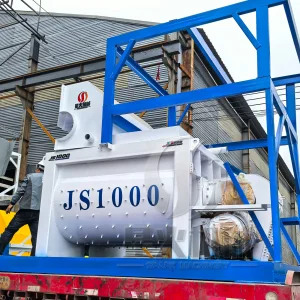
The company offers a comprehensive range of concrete batching solutions, including twin-shaft mixers, planetary mixers, and fully automated mixing systems, catering to both large-scale and small-scale projects. With advanced engineering and precision manufacturing, Cloverdyn plants ensure high efficiency, consistent concrete quality, and long-term durability, meeting the diverse needs of modern construction.
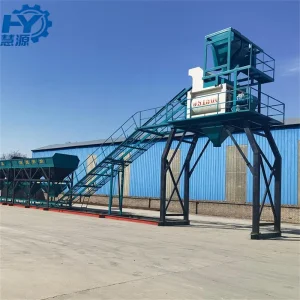
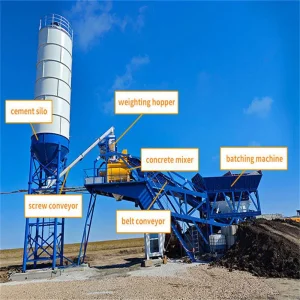
Cloverdyn’s mobile concrete batching plants are designed for flexibility and rapid deployment, allowing clients to set up operations at multiple sites without compromising performance. Their stationary plants are ideal for high-capacity, continuous production, offering seamless integration with cement silos, aggregate storage, and automation controls.
The company emphasizes eco-friendly practices and energy-efficient designs, helping clients reduce waste, lower emissions, and optimize operational costs. With a professional R&D team, state-of-the-art production facilities, and a global distribution network, Zhengzhou Cloverdyn Plant Co., Ltd. delivers customized solutions, OEM services, and dedicated after-sales support.
Committed to innovation, reliability, and customer satisfaction, Cloverdyn continues to advance the concrete batching industry, providing intelligent, high-performance solutions that empower construction projects across China and the world.
Procuring a high-capacity concrete batching plant in Antigua and Barbuda requires meticulous logistics planning. Given the geographic isolation of Caribbean islands, procurement officers must balance initial capital expenditure (CAPEX) with long-term operational costs (OPEX). Key logistical hurdles include ocean freight configurations, port customs clearance at St. John's, electrical grid compatibility (60Hz configurations), and structural compliance with OECS (Organisation of Eastern Caribbean States) building codes.
Cloverdyn addresses these logistics pain points through customized engineering. Every batching plant earmarked for the Caribbean is designed with a containerized modular structure. Standard shipping dimensions allow easy loading into OT (Open Top) or standard 40ft HQ containers, vastly reducing ocean shipping tariffs. Furthermore, pre-wired quick-connect cabling loops and pre-assembled mechanical hinges reduce on-site installation timelines by up to 45%, ensuring that municipal ready-mix operators can initiate plant commissioning shortly after cargo arrival.
The global concrete production industry is undergoing a digital revolution, centering on precision automation and real-time aggregate moisture compensation. Standard mechanical weighing systems are prone to variances due to humidity, changing sand moisture levels, and manual gate timing errors. Modern high-capacity batching operations in St. John's require an automated nervous system to guarantee product batch consistency.
Cloverdyn's advanced batching software integrates directly with Siemens PLC control architecture. Sensor loops embedded within the aggregate bins continuously measure moisture content using high-frequency microwave probes. The system automatically adjusts water and fine-aggregate scaling indicators in real-time, preventing dry batches or over-hydrated mixtures. Operators receive real-time cloud-diagnostics monitoring, showing total daily throughput, material inventory warnings, and energy-consumption profiles, allowing plant managers to oversee multi-site operations from a centralized hub.
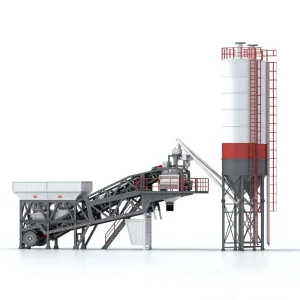
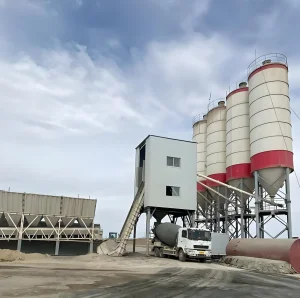
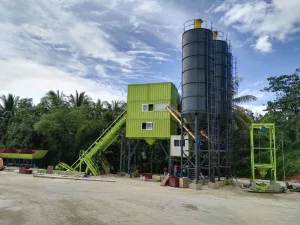
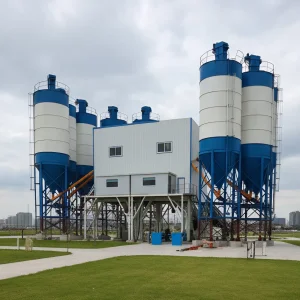
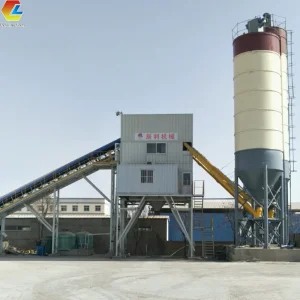
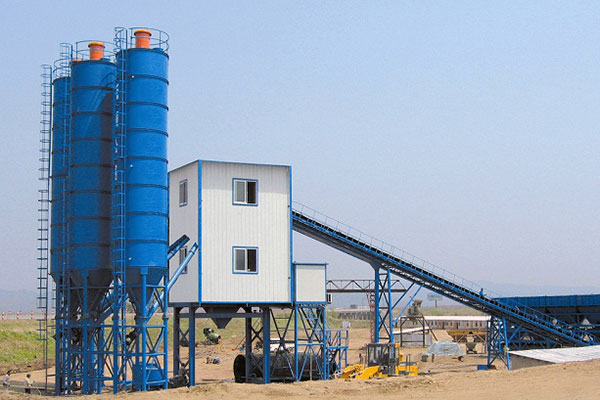
Choosing between stationary and mobile batching solutions is a critical strategic decision for construction entities in Antigua and Barbuda. Stationary plants (such as the Cloverdyn HZS series) are best suited for permanent commercial ready-mix centers near key growth sectors in St. John’s, where large-volume output, maximum concrete uniformity, and integration of multiple dry-cement silos are required. Stationary configurations offer superior scalability, enabling operators to add fly ash feeds, silica fume dosing modules, and large planetary or twin-shaft mixers.
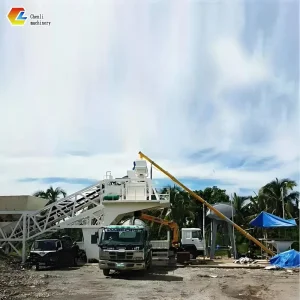
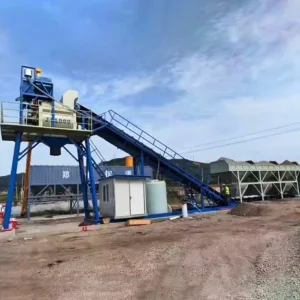
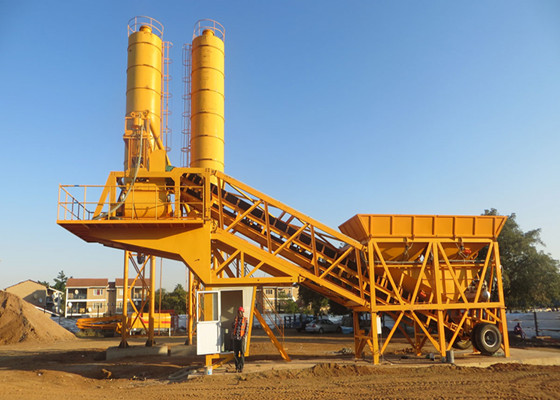
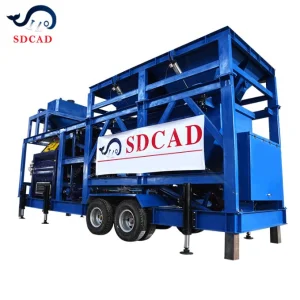
Conversely, mobile batching plants provide critical mobility advantages for remote project sites or inter-island assignments. In Barbuda, where new resorts, runway paving, and housing developments are dispersed, towing a mobile plant directly to the job site eliminates transit times for ready-mix transit mixers. This drastically reduces concrete temperature gain, prevents premature settings, and eliminates the risk of aggregate segregation during long transit routes over uneven roads.
Essential Answers for Procurement Directors, Concrete Technicians, and Contractors in the Caribbean
Select the optimal configuration for your commercial ready-mix operations or on-site engineering projects.
 Cloverdyn Plant