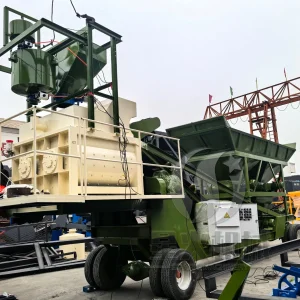
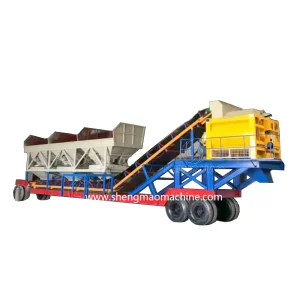
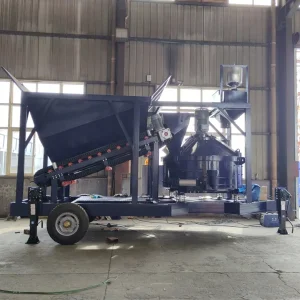
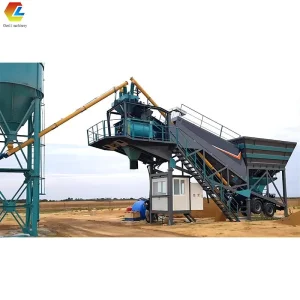
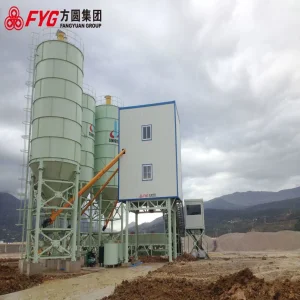
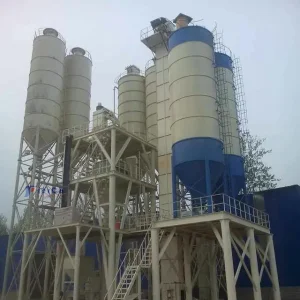
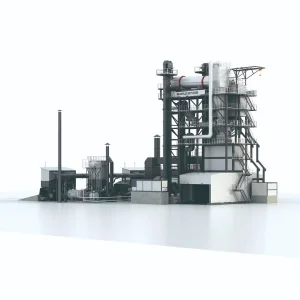
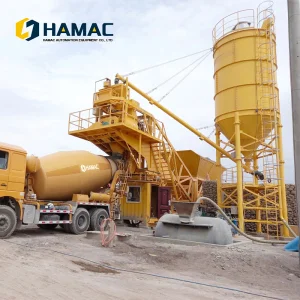
High-capacity engineered plants designed for efficiency, mobility, and reliability
In modern industrial processing, mixing homogeneity is directly correlated with product structural integrity. While traditional twin-shaft mixers remain standard for massive, continuous bulk pours of standard concrete, the rise of specialized engineering materials has forced a paradigm shift. Planetary mixing technology (also known as vertical counter-current mixing) represents the absolute pinnacle of homogeneous dispersion.
By utilizing a unique kinetic trajectory where the mixing stars rotate on their own axes while simultaneously orbiting a central point, planetary mixers eliminate all structural "dead zones." The intensive shear forces generated are uniform, ensuring rapid activation of binders, chemical admixtures, and micro-silica. This deep-dive whitepaper addresses the core parameters, supply chain evolutions, and global supplier dynamics that engineers and procurement directors must evaluate to maximize operational efficiency and asset lifespan.
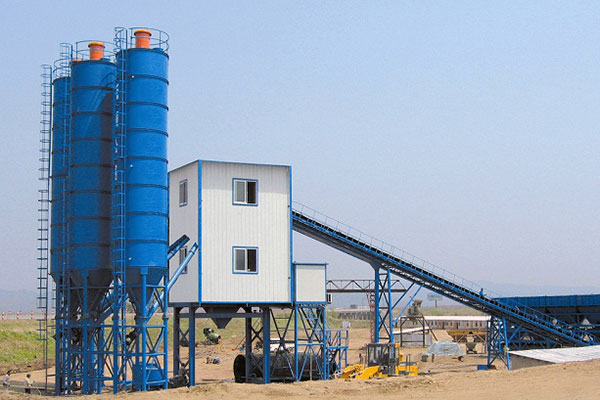
"Zhengzhou Cloverdyn Plant Co., Ltd. is a leading China manufacturer specializing in the design, production, and supply of stationary and mobile concrete batching plants. Established with a commitment to innovation, quality, and efficiency, Cloverdyn has become a trusted partner for construction companies, contractors, and industrial projects worldwide."
The scope of modern B2B batching plant logistics demands that mixing solutions serve dual roles: maximum physical robustness combined with digitized system controls. Under the Cloverdyn engineering framework, the integration of planetary mixers within mobile and modular structures allows processing plants to transition rapidly between complex aggregate recipes without cross-contamination or degradation in mechanical efficiency.
Across the global infrastructure sector, materials are evolving rapidly. Key trends driving the specification of planetary mixing systems include:
For enterprise procurement officers, the decision to purchase a planetary mixer hinges on long-term financial metrics rather than simple capital expenditure (CAPEX). Achieving a low Total Cost of Ownership requires evaluating key design choices:
The planetary gearbox is the central point of mechanical strain. Suppliers utilizing single-stage hardened spur gearboxes ensure uniform torque distribution. Cloverdyn utilizes high-tensile alloy housings with reinforced bearing supports, preventing structural distortion under shock-load conditions common in high-density aggregate processing.
Mixer downtime is directly related to liner degradation. Modern specifications demand high-chromium cast iron alloys (up to 30% Cr concentration) or polyurethane liners for high-friction materials like refractory cement and colored glass sands.
B2B operations lose critical minutes during batch changeovers and washing procedures. Integrating high-pressure hydraulic discharge gates alongside automated rotational spray wash systems ensures rapid cleaning cycles, limiting aggregate residue buildup.
Mixing Homogeneity
Countries Exported
Lower Maintenance Cost
IoT System Support
In an era of volatile logistical networks and variable raw material costs, the centralized supply chain system of Zhengzhou, China, offers significant advantages. Chinese Factory 4.0 practices combine deep system integration with precise execution:
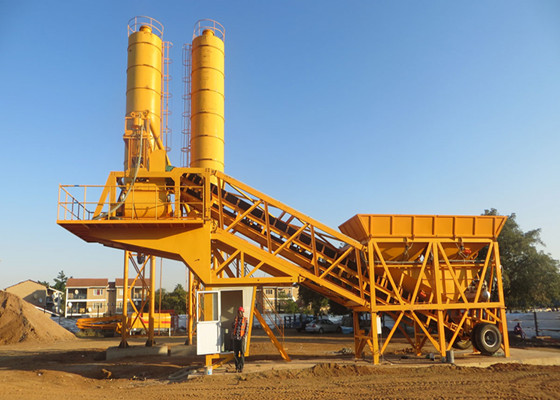
"The company offers a comprehensive range of concrete batching solutions, including twin-shaft mixers, planetary mixers, and fully automated mixing systems, catering to both large-scale and small-scale projects. With advanced engineering and precision manufacturing, Cloverdyn plants ensure high efficiency, consistent concrete quality, and long-term durability, meeting the diverse needs of modern construction."
Because Cloverdyn controls the complete flow of component manufacturing—from planetary mixing arms and specialized scrapers to structural batching towers and computerized automation consoles—engineering tolerances are strictly maintained, resulting in reduced operational vibration and extended bearing lifespans.
The utility of planetary mixing extends far beyond standard concrete. Let's analyze localized industrial environments where vertical counter-current mixers are the standard choice:
Precast elements demand highly consistent structural strengths and flawless surface finishes. Color variance in architectural panels is caused by poor pigment dispersion. The intensive shearing forces of a planetary mixer ensure pigments are distributed evenly throughout the matrix, eliminating streak defects.
Refractory mixes are dry, high-density blends containing specialized binders and metallic fibers. The mechanical design of twin-shaft mixers often results in raw materials packing near the shafts. The planetary movement forces high-density mixes away from the walls and center, keeping the entire charge in active motion.
Glass manufacturing requires sand, soda, and chemical coloring agents to be mixed with absolute consistency. The presence of unmixed silica dust pockets results in bubbling and structural weakness in finished panes. Planetary mixers are sealed to prevent dust escaping while keeping the chemical inputs consistent.
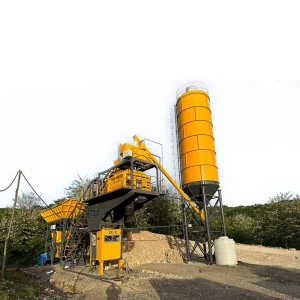
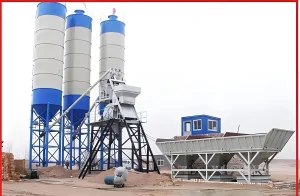
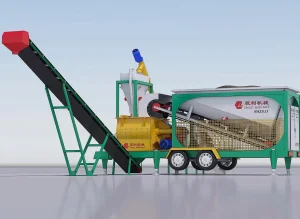
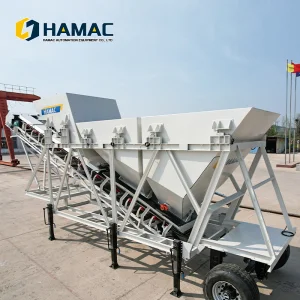
"Cloverdyn’s mobile concrete batching plants are designed for flexibility and rapid deployment, allowing clients to set up operations at multiple sites without compromising performance. Their stationary plants are ideal for high-capacity, continuous production, offering seamless integration with cement silos, aggregate storage, and automation controls."
Cloverdyn plants emphasize eco-friendly practices and energy-efficient designs, helping clients reduce waste, lower emissions, and optimize operational costs. With a professional R&D team, state-of-the-art production facilities, and a global distribution network, Zhengzhou Cloverdyn Plant Co., Ltd. delivers customized solutions, OEM services, and dedicated after-sales support.
Committed to innovation, reliability, and customer satisfaction, Cloverdyn continues to advance the concrete batching industry, providing intelligent, high-performance solutions that empower construction projects across China and the world.
Why Cloverdyn's planetary series stands out in severe B2B environments
The mixing blades rotate opposite to the outer vessel rotation, ensuring high kinetic shear and eliminating material dead zones.
Reinforced gearbox casing designed to absorb torque surges, reducing downtime and extending structural life.
Equipped with manual override and multi-stage control limits, preventing blockages and ensuring clean batch outputs.
Technical clarifications to assist B2B procurement managers and plant engineers
High-capacity systems engineered for continuous production and extreme durability
 Cloverdyn Plant