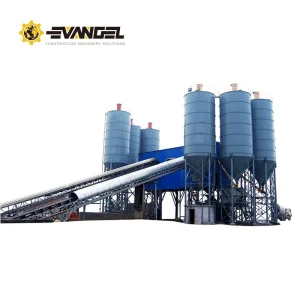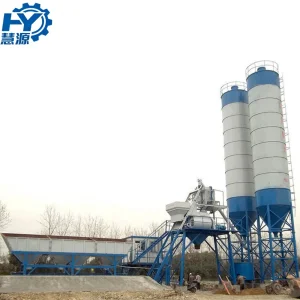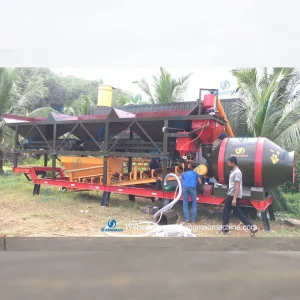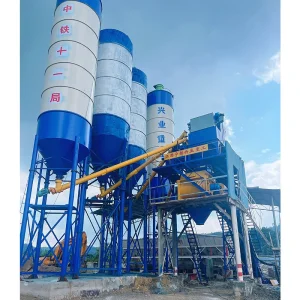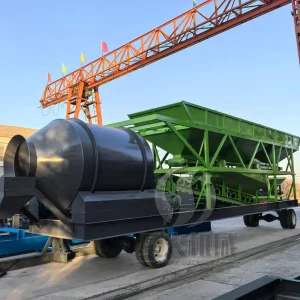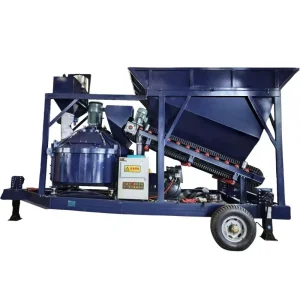
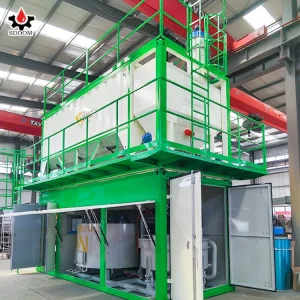
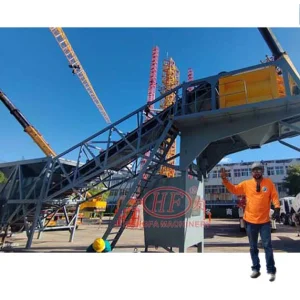
In modern global civil engineering, the subgrade serves as the foundation of all infrastructural durability. Stabilized Soil Mixing Plants (often referred to as pugmill plants or soil-cement batching plants) have transformed from basic mechanical blending units into sophisticated, digitally controlled engineering systems. As highways, high-speed rails, airports, and urban development projects demand higher load-bearing capacities, the quality, homogeneity, and reliability of the pavement base become non-negotiable parameters.
Zhengzhou Cloverdyn Plant Co., Ltd. stands at the forefront of this industrial transformation. As a premium China-based manufacturer, we specialize in the design, development, and delivery of advanced stationary and mobile concrete batching plants as well as dedicated soil stabilization complexes. By integrating cutting-edge mixing geometry with robust automation, Cloverdyn provides contractors worldwide with the mechanical leverage needed to achieve precise cement, lime, fly ash, and emulsion stabilization.
This whitepaper explores the technological paradigms of CE certified soil mixing, analyzes global procurement dynamics, highlights the advantages of China’s Industry 4.0 manufacturing framework, and provides engineers with an objective framework for selecting high-performance batching machinery.
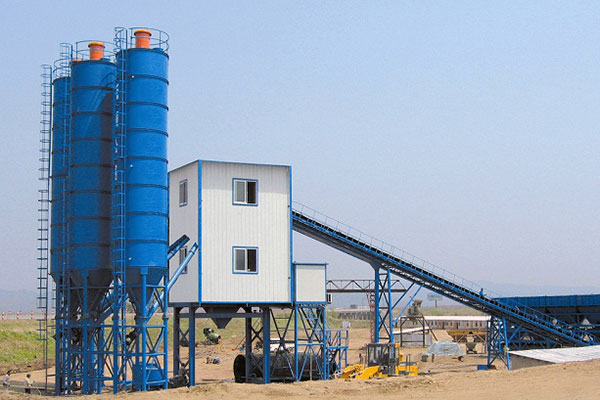
The international construction machinery landscape is undergoing a systemic shift. Driven by climate action policies, rising material costs, and stringent infrastructure longevity requirements, the demand for high-efficiency mixing plants has intensified. Five key trends are shaping the future of stabilized soil and concrete batching operations:
Engineers are increasingly specifying Recycled Concrete Aggregate (RCA) and reclaimed asphalt pavement (RAP) in stabilized sub-bases. Modern mixing plants must dynamically adjust batching ratios to accommodate varying moisture and density loads of recycled materials.
For large-scale roadworks, batch mixing is being bypassed in favor of continuous high-volume mixers. These mixers can operate uninterrupted, producing up to 800 tons per hour of homogeneous sub-base material while minimizing mechanical wear.
CE Certification is no longer a localized European standard; it is a global benchmark for safety and quality. Procurement teams in Latin America, Southeast Asia, and the Middle East prioritize CE-marked equipment to guarantee compliance and operational safety.
Understanding the mechanical distinctions between a standard concrete batching plant and a stabilized soil mixing system is key to making informed procurement decisions. While both handle aggregates, cement, and water, their engineering configurations diverge in three main areas:
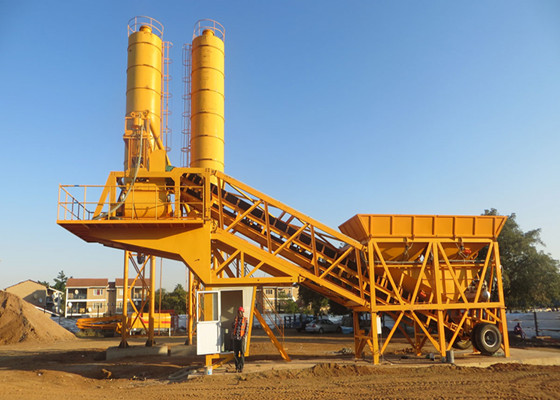
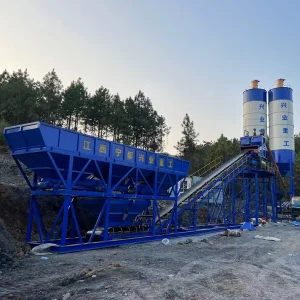
By offering specialized configurations, Zhengzhou Cloverdyn Plant Co., Ltd. addresses both technical paradigms. Our concrete batching plants leverage heavy-duty twin-shaft systems that handle stiff-consistency mixes, while our specialized continuous mixers provide high-volume throughput for soil stabilization, road sub-bases, and land reclamation projects.
Global buyers are increasingly focusing on the structural resilience of their machinery suppliers. China's industrial ecosystem has evolved from high-volume production to advanced, precision engineering. At Zhengzhou Cloverdyn, our manufacturing workflows are integrated with modern industrial technologies:
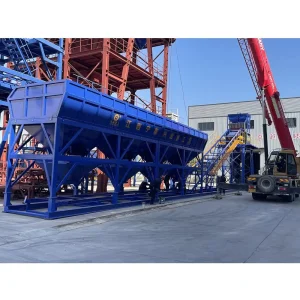
All heavy framework, including aggregate bins, mixer supports, and silo cones, is welded by automated robotic stations. This ensures consistent weld penetration, minimizes internal stress in the steel, and prevents structural fatigue under continuous loads.
Our plants are engineered with globally recognized electronic and pneumatic systems. By standardizing on Siemens PLCs and Schneider switchgear, we ensure that spare parts are easily accessible and systems can be serviced locally by electrical engineers in any region.
We manage our production line from raw plate cutting to final paint curing. This vertical integration allows us to offer shorter lead times and adapt designs to custom client requirements, such as unique aggregate bin sizing or specialized dust control systems.
Every jobsite presents unique geographic and environmental challenges. A generic plant design rarely meets the specific operational needs of varying climates and terrains. At Cloverdyn, we analyze the location-specific requirements of each project to deliver optimized configurations:
In areas like the Middle East or North Africa, windblown sand and high temperatures present unique challenges. Our plants feature sealed conveyor systems, dust-proof control rooms with air conditioning, and water temperature compensation systems that maintain exact moisture ratios despite ambient heat.
For city bypasses or municipal expansions in Western Europe, noise and dust emissions are strictly regulated. We equip our plants with full-housing enclosures, negative-pressure baghouse dust filters, and low-decibel electric motors to meet strict environmental standards.
Marine environments expose equipment to highly corrosive salt air. We use specialized, anti-corrosive epoxy paint, polyurethane topcoats, and stainless-steel hardware to ensure long-term durability for ports, seawalls, and coastal highway installations.
CE Certification indicates that the machinery complies with all European Union health, safety, and environmental protection directives. For mixing plants, this covers the Machinery Directive (2006/42/EC), Low Voltage Directive (2014/35/EU), and EMC Directive (2014/30/EU). Cloverdyn CE certified plants feature emergency stop systems, protective guarding for moving parts, dust emission control, and standardized electrical wiring.
Our systems utilize dynamic gravimetric dosing systems. Aggregates are continuously weighed on belt scales equipped with load cells that adjust speed via variable frequency drives (VFD). Cement is metered through screw conveyors with flow meters linked to the central control PLC. This closed-loop system maintains consistent dosing accuracy within ±1% for aggregates and ±0.5% for cement.
A specialized continuous stabilized soil mixing plant is designed for high-volume sub-base production. It is not suitable for producing high-grade structural concrete, which requires exact batching cycles. However, our HZS and YHZM series concrete batching plants are versatile; they can produce lean concrete and cement-bound materials (CBM) for base layers by adjusting the mixing recipes and cycles.
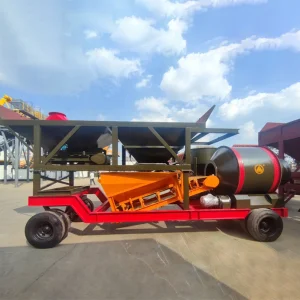
Mobile plants (like our YHZM series) are designed with a single-trailer chassis. They can be transported using standard tractor trucks, require minimal foundation work, and can be fully set up and calibrated within 2–3 days. This makes them ideal for linear infrastructure projects like highways and railways. Stationary plants, on the other hand, are optimized for high-volume, long-term operations in a fixed location.
We equip our automated plants with remote internet connection modules. With the customer's permission, our engineers in China can access the plant’s PLC system to diagnose software issues, update operational parameters, and identify faults. For physical maintenance, we ship spare parts worldwide and can deploy engineers for on-site commissioning and training.
Our plants include advanced environmental features such as dust containment bags on cement silos, fully enclosed belt conveyors, and active water recycling systems. We also design our mixing paddles to optimize material flow, which reduces motor load and helps lower energy consumption by up to 15% compared to older designs.
 Cloverdyn Plant