Global Leaders in Advanced Concrete & Grouting Plant Design and Manufacture
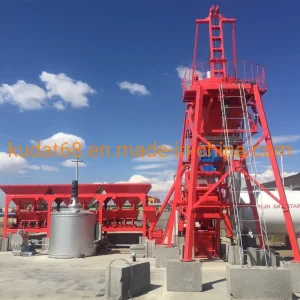
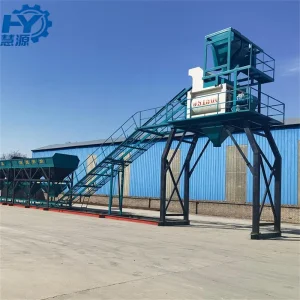
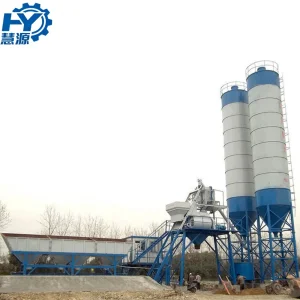
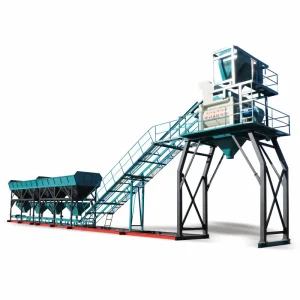
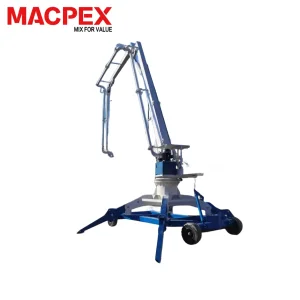
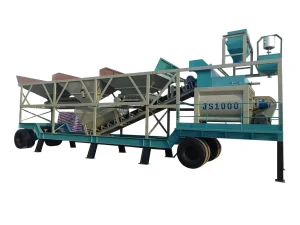
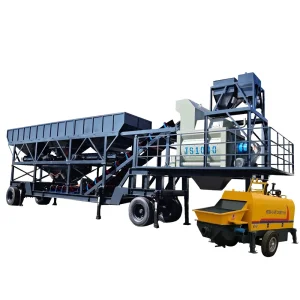
Zhengzhou Cloverdyn Plant Co., Ltd. is a leading China manufacturer specializing in the design, production, and supply of stationary and mobile concrete batching plants. Established with a commitment to innovation, quality, and efficiency, Cloverdyn has become a trusted partner for construction companies, contractors, and industrial projects worldwide.
The company offers a comprehensive range of concrete batching solutions, including twin-shaft mixers, planetary mixers, and fully automated mixing systems, catering to both large-scale and small-scale projects. With advanced engineering and precision manufacturing, Cloverdyn plants ensure high efficiency, consistent concrete quality, and long-term durability, meeting the diverse needs of modern construction.
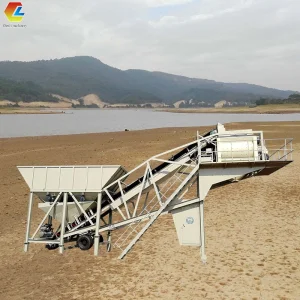
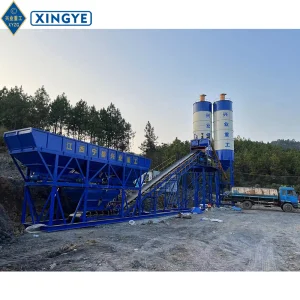
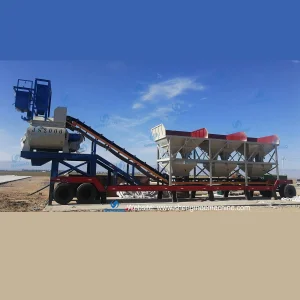
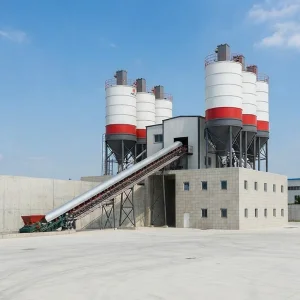
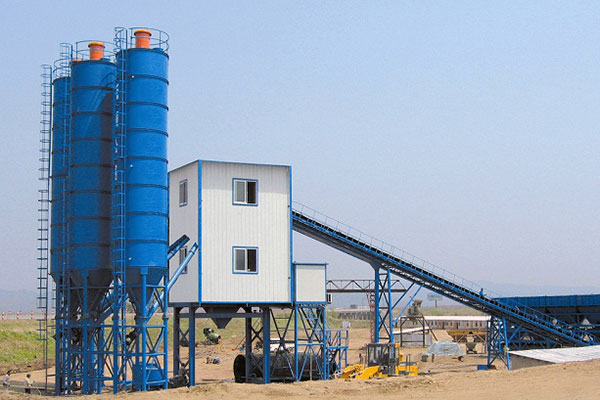
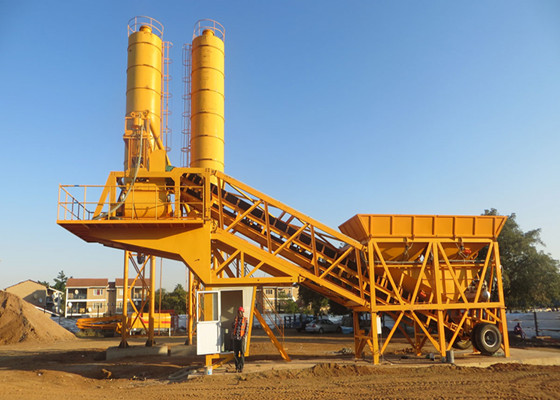
Cloverdyn’s mobile concrete batching plants are designed for flexibility and rapid deployment, allowing clients to set up operations at multiple sites without compromising performance. Their stationary plants are ideal for high-capacity, continuous production, offering seamless integration with cement silos, aggregate storage, and automation controls.
The company emphasizes eco-friendly practices and energy-efficient designs, helping clients reduce waste, lower emissions, and optimize operational costs. With a professional R&D team, state-of-the-art production facilities, and a global distribution network, Zhengzhou Cloverdyn Plant Co., Ltd. delivers customized solutions, OEM services, and dedicated after-sales support.
The transition from manual hydration systems to high-shear colloidal batching plants
Traditional paddle mixers struggle with water-to-cement (W/C) ratios below 0.45 without leaving unhydrated cement agglomerations. Modern CE certified grout plants integrate high-shear colloidal mixers operating at speeds exceeding 1,500 RPM. This shear energy breaks down particle clustering, maximizing hydration and ensuring highly fluid, stable, and bleed-resistant grout mixes.
The integration of Siemens PLC architectures, Coriolis mass flowmeters, and digital weight sensors has redefined precision. Modern mixing plants record and adjust ingredient weights dynamically. Real-time logging delivers full traceability, a requirement for high-consequence projects like high-speed rail, nuclear plants, and tunnel boring machine (TBM) operations.
Regulatory requirements (like OSHA and EU health directives) demand zero dust emissions. Modern plants incorporate active dust collection systems, integrated bag breakers, and sealed pneumatic feed mechanisms. This protects workers from crystalline silica and helps contractors comply with strict ESG targets.
For global contractors, equipment compliance is non-negotiable. Zhengzhou Cloverdyn's CE Certified Grout Mixing and Batching Plants adhere strictly to EN ISO 12100:2010 (safety of machinery) and the EU Machinery Directive 2006/42/EC.
Addressing the complex requirements of procurement officers in heavy civil engineering
Logistics represent a significant portion of equipment costs. Procurement teams prioritize grout plants that fit inside standard shipping containers (such as high-cube 20-foot or 40-foot units) or feature integrated wheels for rapid tow-behind site changes. Rapid deployment saves engineering hours and lowers mobilization costs.
Advanced geotechnical projects require complex chemical admixtures. Modern batching plants must handle multiple material inputs—water, cement, bentonite, fly ash, silica fume, and liquid accelerators—simultaneously. Precision dosing systems prevent batch contamination and ensure stable slurry parameters.
Civil infrastructure contractors need data integration. Modern batching plants must connect to local control stations via Profinet, Modbus, or Ethernet/IP, sending real-time mix data directly to SCADA systems or cloud-based management portals.
Cement slurry is highly abrasive. Global buyers evaluate the wear life of impeller blades, colloidal pump chambers, and valve linings. Using wear-resistant coatings (like high-chromium cast iron and polyurethane valves) reduces maintenance intervals and total cost of ownership (TCO).
Tailored grout batching architectures matching specific project requirements
Continuous tunnel boring requires high-volume, continuous supply of two-part grout (A component: cement-bentonite; B component: sodium silicate). Zhengzhou Cloverdyn provides high-throughput mixing loops that feed directly into the TBM tail skin injection lines, keeping pace with constant forward excavation.
Seepage control in high-head dams demands ultra-fine cement grouting at high pressures. Cloverdyn batching plants feature micro-fine cement capability, producing uniform slurries without lumps that could clog rock fissures.
For urban foundation consolidation and tie-back anchor installations, space is at a premium. Cloverdyn's compact mobile grout plants integrate mixing, storage, and pumping on a single skid, allowing operation in tight urban areas.
Zhengzhou Cloverdyn Plant Co., Ltd. ensures global compliance through localized service partnerships and a centralized spare parts network. Our technicians are trained in international safety regulations, allowing them to support commissioning and validation anywhere in the world.
As engineering targets push the boundaries of materials science, Zhengzhou Cloverdyn is investing in three core areas for future growth:
Answering key technical questions regarding grout batching plants
 Cloverdyn Plant