Large-scale projects are entering a more demanding decade. Owners now face tighter schedules, skilled-labor shortages, material volatility, and stricter carbon expectations. These pressures explain why modular plants are preferred for large-scale projects. They move repeated work into controlled factory conditions, where teams can standardize fabrication, inspect components, and reduce weather-related delays.
The concept is practical, not merely fashionable. Modules can leave a plant with installed piping, wiring, insulation, and tested equipment. On site, cranes place them onto prepared foundations. Picture a process unit arriving with labeled connections, protected instruments, and fewer unfinished tasks exposed to rain. Ryan E. Smith, a respected modular construction researcher, has stated, “Modular construction is not a building type; it is a process.” His observation matters because successful modular delivery depends on design coordination, logistics, quality control, and disciplined installation.
The advantages are substantial. Factory repetition can improve safety and reduce waste. Parallel manufacturing and site preparation can shorten the overall program. Digital coordination can also reveal clashes before steel is cut. Yet modular plants are not automatically cheaper or faster. Poor transport planning, late design changes, or unsuitable site access can erase expected benefits. That uncomfortable limitation deserves attention. Every project needs a serious feasibility review before modularization begins.
In 2026, the strongest business case will combine engineering evidence with field experience. This article examines schedule certainty, quality, safety, sustainability, cost control, and project risk. It also considers where modular delivery struggles. The goal is not to praise one method blindly. It is to explain when modular plants create measurable value for complex, large-scale developments.
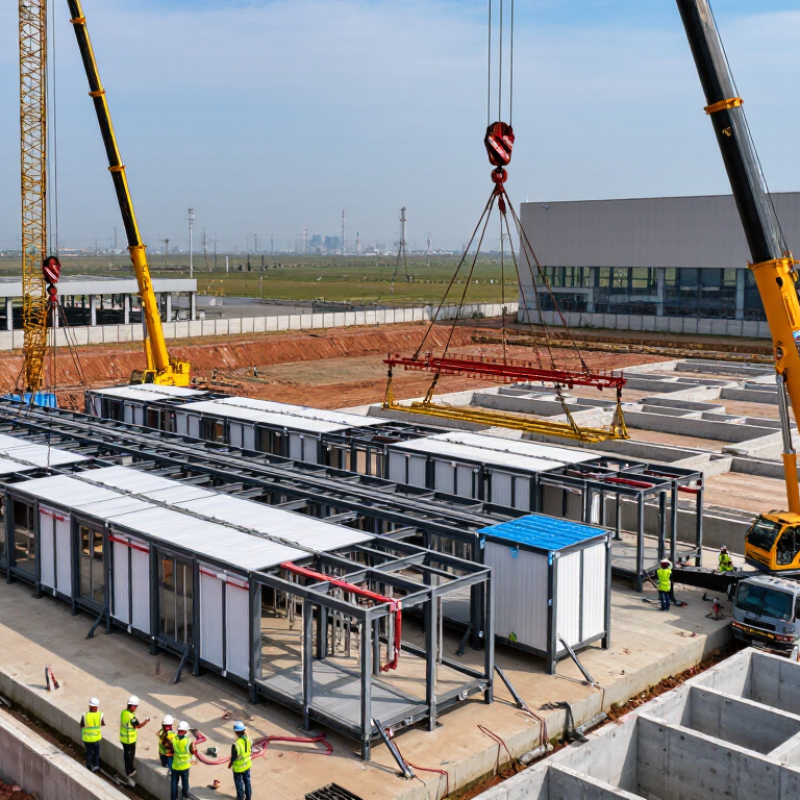
Large-scale projects are changing inside the factory, not only on the jobsite. Modular plants can move 60–90% of fabrication, assembly, and quality checks off-site. This includes pipe racks, equipment skids, electrical rooms, and structural frames.
A Modular Building Institute industry survey reported that off-site methods can reduce site labor and improve schedule control. McKinsey Global Institute estimated that modular construction may cut project timelines by 20–50% and costs by up to 20%. These figures are not guaranteed. Design repetition, transport limits, and local labor skills still matter.
The practical benefit is visible. Workers install tested modules while foundations continue outdoors. Fewer crews compete for the same narrow work area. Factory jigs also support repeatable welds, cleaner cable routing, and earlier inspections. However, poor coordination can erase these gains quickly. A late equipment change may force expensive rework across several completed modules. That risk requires shared digital models, strict interface drawings, and early transport planning. The process is efficient, but not effortless. Teams should challenge the 60–90% target before accepting it, because unusual geometry or remote sites may keep more work in the field.
Large-scale projects lose time through repeated site activities, weather delays, and crowded work areas. Modular delivery changes that sequence. Units are assembled indoors while foundations, utilities, and access roads progress on site. A 2019 industry analysis, Modular Construction: From Projects to Products, reported potential schedule reductions of 20–50%, depending on design standardization and project coordination. The frequently cited 30–50% range applies best when modules are engineered early and repeated consistently.
The practical difference is visible on site. A finished bathroom pod may arrive with fixtures, wiring, and tested surfaces already installed. Crews then connect services instead of building every layer outdoors. That can reduce wet trades, inspection interruptions, and daily weather exposure. It also creates earlier schedule certainty for lenders, operators, and project managers. But the estimate is not a promise. It sounds optimistic. Sometimes it is.
A SmartMarket study on prefabrication and modular construction identified schedule reliability as a major reason for adoption among construction professionals. Yet transport routes, crane capacity, factory quality control, and late design changes can erase the advantage. Experienced teams freeze critical layouts early, track module tolerances carefully, and test connection details before mass production. A single unresolved interface can delay dozens of units. Modular plants perform best when planning discipline matches factory precision, not when speed is treated as automatic.
Why Modular Plants Are Best for Large Scale Projects 2026?
Large-scale projects increasingly move major construction work into controlled factory environments. Workers assemble pipe racks, equipment skids, cable trays, and structural frames under repeatable conditions. This approach reduces the number of trades competing for space on site. It also limits weather delays, access conflicts, and unsafe lifting activities. A factory team can prepare fixtures, tools, and materials before production begins. That preparation often improves labor productivity and reduces avoidable rework.
Factory production changes the cost profile. On-site crews spend fewer hours measuring, cutting, welding, and fitting components. Fewer labor hours can reduce accommodation, transport, supervision, and temporary facility expenses. Quality inspectors can check repeated assemblies using consistent procedures. Digital work instructions also help less experienced workers follow critical steps. Small errors are easier to identify beside a workbench than inside a crowded construction area.
The model is not flawless. Factory space, transport limits, and early design decisions create real constraints. A late equipment change may affect several completed modules. That risk demands accurate engineering and disciplined communication. In practice, the strongest results come from reviewing lifting routes, connection details, and installation sequences early. A missing bracket can still stop progress. Modular production reduces site workload, but it does not remove the need for skilled planners, inspectors, and installers.
Cost and Labor: Factory Production Reduces On-Site Workload
The chart uses a normalized labor-hour index, with conventional construction set at 100. Industry-reported modular construction benchmarks commonly indicate approximately 40–50% fewer on-site labor hours because major assemblies are produced in a controlled factory environment. Reduced site labor can help lower congestion, improve schedule predictability, and reduce exposure to weather-related delays.
Why Modular Plants Are Best for Large-Scale Projects 2026?
Factory production gives construction teams tighter control over materials, measurements, and waste. The U.S. Environmental Protection Agency reported about 600 million tons of construction and demolition debris in 2018. That volume was more than twice municipal solid waste. Modular plants can reduce avoidable waste by 20–30% when design, cutting, and procurement are digitally coordinated.
The controls are practical. Workers use fixed cutting stations, reusable formwork, labeled storage, and measured delivery kits. Offcuts can be recorded before they disappear beneath packaging. Quality teams also inspect wall panels, service openings, and connection points under consistent lighting. These checks reduce rework, which often creates more waste than initial mistakes.
The figure is not automatic. Poor design coordination can move waste from the factory to the site. McKinsey’s 2019 report on modular construction found strong potential for faster schedules and improved productivity, but it also stressed process discipline. In real projects, damaged components, late changes, and over-ordering still occur. A 20% reduction is achievable in many controlled programs, while 30% requires accurate drawings, trained crews, and honest waste tracking. Small errors remain expensive.
| Performance Dimension | Conventional Site-Built Approach | Factory-Controlled Modular Approach | Potential Improvement | Why It Matters on Large Projects |
|---|---|---|---|---|
| Material waste generated during production and installation | Typically planned with a higher site-cutting and handling allowance; exposed to weather, storage damage, and repeated movement. | Controlled cutting lists, standardized assemblies, centralized material storage, and improved production sequencing. | 20–30% lower waste target | Less purchased material becomes off-cuts, damaged stock, packaging residue, or installation scrap. |
| Dimensional accuracy | Measurements and adjustments are performed across multiple site trades and may vary with site conditions. | Repeatable jigs, fixtures, digital drawings, calibrated tools, and in-process inspections support consistent dimensions. | Higher repeatability | Accurate modules reduce interface problems during final assembly and limit corrective work. |
| Weather exposure during construction | Materials and partially completed work remain exposed to rain, wind, humidity, and temperature changes. | Most fabrication occurs indoors, with site work concentrated on foundations, connections, services, and commissioning. | Reduced exposure | Lower exposure can help protect insulation, finishes, timber products, electrical components, and stored materials. |
| Quality inspection point | Inspection is often distributed across changing site locations and subcontractor activities. | Inspection checkpoints can be embedded into a repeatable production line before modules leave the factory. | Earlier defect detection | Defects are identified before transport and installation, when access and correction are generally easier. |
| Rework and corrective installation | Rework may require several trades to return to the same work area, creating additional labor and material use. | Standard work instructions, first-article checks, and documented inspection records reduce repeated installation errors. | Lower rework exposure | Reducing rework helps protect the schedule and prevents additional waste caused by removal and replacement. |
| Material traceability | Material records may be spread across suppliers, delivery areas, and subcontractor documentation. | Batch records, barcode or serial tracking, and controlled bills of materials can be linked to each module. | Improved control | Traceability supports quality audits, defect investigation, maintenance planning, and responsible sourcing requirements. |
| Waste segregation and recycling potential | Mixed waste streams are more likely when multiple trades work simultaneously in confined site areas. | Factory work areas can separate metal, timber, cardboard, plastics, and off-cuts at the point of generation. | Higher recovery potential | Cleaner waste streams are easier to reuse or recycle than mixed construction waste. |
| Schedule predictability | Progress can be affected by weather, site congestion, trade stacking, late deliveries, and access restrictions. | Factory production can proceed in parallel with site preparation while using controlled workflows and planned logistics. | More predictable delivery | Parallel workstreams can shorten the period between foundation completion and building enclosure. |
| Design standardization | Repeated site operations may be adjusted independently by different crews. | Standardized module dimensions, connection details, and work instructions can be reused across project phases. | Better consistency | Standardization supports repeat production, simplifies training, and makes quality trends easier to measure. |
| Waste measurement capability | Waste data is commonly collected at skips, transfer stations, or project level. | Material issues, off-cuts, defects, and rejected components can be recorded by production batch or module. | More actionable data | Detailed data allows teams to identify recurring waste sources and improve future designs and processes. |
| Interpretation: The 20–30% waste-reduction range is a practical planning benchmark for projects that combine repeatable modular design, controlled procurement, factory inspection, accurate cutting, and disciplined waste segregation. Actual results vary by design complexity, material selection, logistics, site conditions, and project execution quality. | ||||
Large-scale energy projects are entering a tighter delivery cycle. The International Energy Agency’s Electricity 2024 report forecasts average global electricity demand growth of about 4% annually through 2026. That pressure makes repeatable plant modules increasingly valuable. Engineers can standardize vessels, skids, control rooms, and electrical systems before construction begins. Each unit becomes a tested building block for multi-gigawatt capacity.
Repeatability changes project sequencing. A factory can assemble pipe racks while foundations are prepared onsite. Quality teams can inspect welds, insulation, and control panels under consistent conditions. The same IEA report expects more than 2,500 terawatt-hours of additional electricity demand by 2026. Developers therefore need capacity that expands without redesigning every project. Modular plants support phased commissioning, allowing early units to operate while later units are installed.
The caveat matters. Modularization is not automatically cheaper. Transport limits, lifting plans, local codes, and poor interface control can erase schedule gains. The Construction Industry Institute has repeatedly linked front-end planning with better cost and schedule performance. That lesson remains relevant in 2026. Project teams should freeze module boundaries early and validate them with digital models and field reviews. One missed cable route can delay a whole train. It happens. Yet disciplined repetition still offers a practical path for delivering multi-gigawatt projects faster, with measurable quality checks and clearer expansion plans.
Fabrication, assembly, and quality checks can move off-site. Pipe racks, equipment skids, electrical rooms, and structural frames are common examples. Much depends on design repetition and transport limits.
Some projects move 60–90% of major work into factories. This range is not guaranteed. Unusual shapes, remote locations, and limited transport access may keep more work on-site.
Modular methods may reduce timelines by 20–50% in suitable projects. Factory teams can build modules while foundations continue outdoors. The benefit disappears quickly when late design changes create rework.
Workers use fixed jigs, steady lighting, labeled storage, and repeatable inspection steps. These conditions support cleaner welds, accurate cable routing, and earlier checks. Factory control helps, but it cannot correct poor drawings.
Coordinated modular work may reduce avoidable waste by 20–30%. Digital cutting plans, reusable forms, and measured delivery kits help control materials. Damaged parts and over-ordering still occur.
Standard vessels, skids, control rooms, and electrical systems can be reused across project phases. Each module becomes a tested building block. Repetition can speed expansion, but identical designs may not fit every site.
Late equipment changes can affect several completed modules. Transport limits, lifting plans, local codes, and missed cable routes can also cause delays. One small interface error may stop an entire installation sequence.
Teams should freeze module boundaries early and check them with shared digital models. Interface drawings, transport routes, lifting plans, and field reviews need early agreement. Perfect planning is unlikely, so teams should keep reviewing assumptions.
No. Controlled projects may achieve savings, but modularization is not automatically cheaper. Rework, damaged components, extra transport, and weak coordination can erase expected gains.
Early modules can begin operation while later units are installed. This approach supports gradual capacity growth and repeated quality checks. It sounds simple, but site interfaces still require careful control.
Why modular plants are preferred for large-scale projects is increasingly clear in 2026: they move much of the work from unpredictable construction sites into controlled factory environments. With approximately 60–90% of fabrication and assembly completed off-site, modular delivery can reduce site congestion, simplify installation, and support schedules that may be 30–50% faster than traditional approaches. Factory production also lowers the amount of on-site labor required, helping project teams manage workforce shortages and improve coordination.
Beyond speed and labor efficiency, modular plants offer consistent quality, safer working conditions, and better material control. Standardized factory processes can reduce construction waste by roughly 20–30% while making inspections and testing more systematic. Most importantly, repeatable modules can be produced and deployed across multiple locations, allowing multi-gigawatt projects to scale more efficiently. This combination of speed, consistency, reduced waste, and repeatability makes modular plants a practical solution for complex large-scale development.

Cloverdyn Plant